fishes
The God of Small ThingsThe fishes are more than background wildlife in Ayemenem: they register the force of seasonal change, the river’s ecological decline, and the fragile intimacies of childhood. They surface in rain-filled highway potholes and in memories of fishing with Velutha, but later most are dead in a river fouled by sewage and pesticides. Across these appearances, the fishes connect a living landscape to human routines—and make its damage visible without turning it into an abstraction.
Seasonal Landscape and Local Life
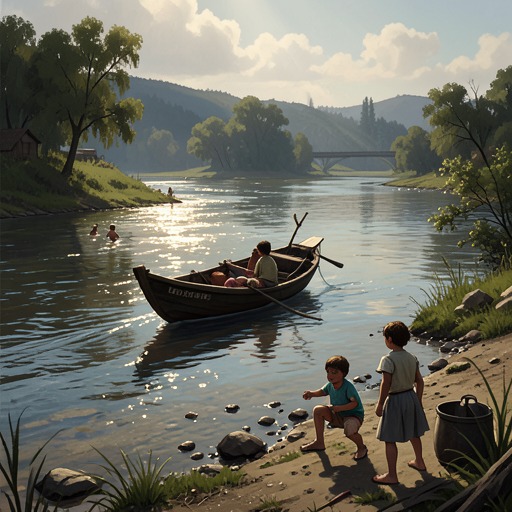
By early June, the southwest monsoon transforms the countryside with three months of wind and water interrupted by short spells of brilliant sunshine. The rains blur boundaries and alter ordinary routes: boats ply through bazaars, while small fishes appear in puddles filling potholes on the highways. Their sudden presence makes the season’s abundance concrete. Water has spread beyond the river and into the road; creatures associated with aquatic life occupy spaces ordinarily shaped by traffic and human movement.
This image belongs to a wider pattern of the landscape exceeding its boundaries. Tapioca fences take root and bloom, moss softens brick walls, and creepers spill across flooded roads. The fishes in the potholes are not simply decorative signs of a lush monsoon. They show how thoroughly rain remakes the inhabited environment, carrying aquatic life into the built landscape and briefly making the road part of a larger watery world.
The River and Environmental Decline
In adulthood, after being returned to Ayemenem, Estha walks along the river, whose water smells of sewage and pesticides purchased with World Bank loans. The harm is visible in the fishes: most have died, and the survivors suffer from fin rot and boils. The contrast with monsoon abundance is stark. Earlier, water produced unexpected life in roadside puddles; here, the river’s persistent water no longer sustains most of its fish, and those that remain bear visible signs of disease.
The description gives environmental damage a bodily form. Pollution is not presented as an abstract measure of declining water quality: it has consequences for living creatures that cannot leave the river. The fishes’ injuries make the river’s degradation legible to Estha as he walks its banks. Set against new Gulf-funded houses and the older homes of Ayemenem, this damaged river also ties the changing landscape to the material world people inhabit, rather than treating nature as scenery separate from human life.
Fishing, Food, and Childhood
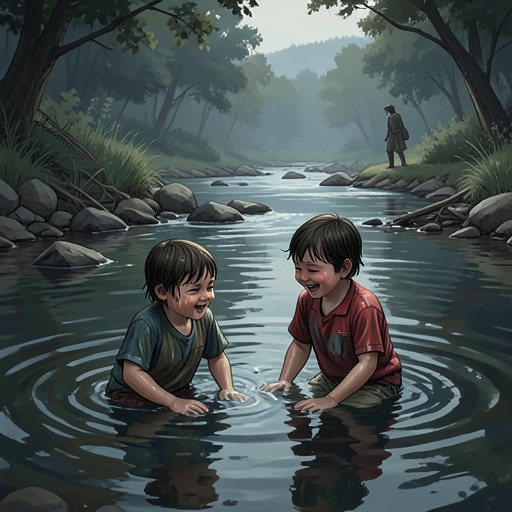
The fishes also belong to the twins’ close association with Velutha. Although Rahel and Estha are forbidden to visit the little laterite hut where he lives with Vellya Paapen and Kuttappen, they go there and spend hours with him among wood shavings. Their friendship is expressed through practical teaching and shared time: Velutha shows them how to use a planer, makes Rahel a fishing rod she considers her luckiest, and teaches both twins to fish.
Fishing thus becomes one of the ordinary activities through which Velutha’s care takes shape. The rod is a made object, but its value lies in what it enables: Rahel and Estha learn a skill beside someone whose house and company they are not supposed to seek. The river and its fishes become part of a relationship formed through craft, attention, and shared experience, rather than through formal permission.
Food carries the same memory into the hut. On a good day, its smells include fresh wood shavings, sun, and red fish curry cooked with black tamarind. Estha regards it as the best fish curry in the world. The fishes here are not only creatures caught from water; they are also part of hospitality and a cherished judgment formed in childhood. The sensory contrast between the river’s later pollution and this remembered meal is sharp: one appearance records ecological injury, the other preserves an intimate world of taste and welcome.
Memory, Kinship, and the Changing River
An older image of the river survives in the description of Aleyooty Ammachi. Though the river can no longer be seen from Ayemenem House, the house retains a “river-sense.” Through the holes in Aleyooty Ammachi’s stretched earlobes, the image gathers the hot river, dark trees, fishermen in boats, and fishes. The passage makes the river present even when it is out of sight: not as a distant view, but as an enduring current in the house’s remembered relation to its surroundings.
That river-sense contrasts with Estha’s later walks beside polluted water. The earlier image holds together people, boats, trees, and fishes as elements of a familiar landscape; the adult walk encounters a river whose life has been diminished. The fishes recur in both versions of Ayemenem, but their circumstances change—from visible abundance and remembered sustenance to mass death and disease. Their presence gives the novel a small, precise measure of that change.
The subject’s significance rests in this movement between the everyday and the damaged. Fishes appear in a child’s rainy-season world, in an act of teaching shared with Velutha, in a remembered meal, and in Estha’s adult encounter with a polluted river. They make place palpable through what lives there, what people do with it, and what no longer survives. In that sense, their appearances carry both the intimacy of local memory and the cost of a landscape altered over time.